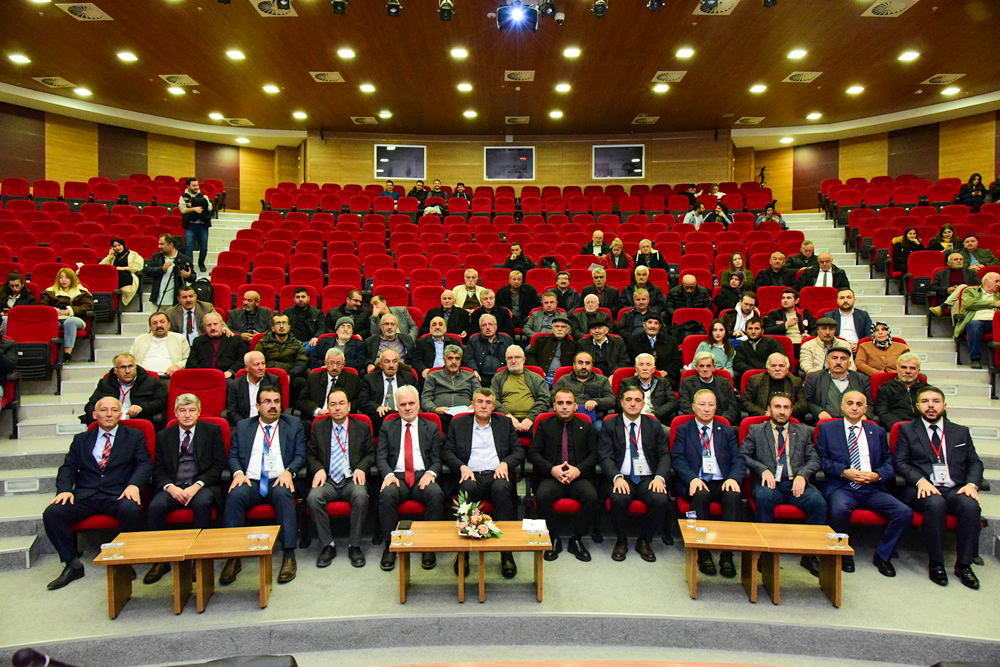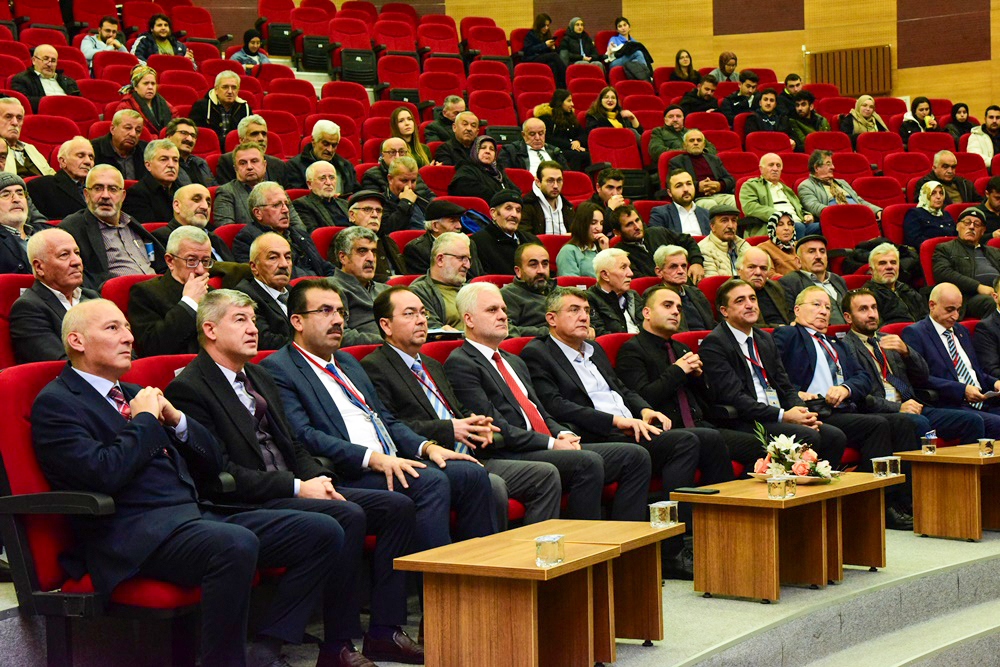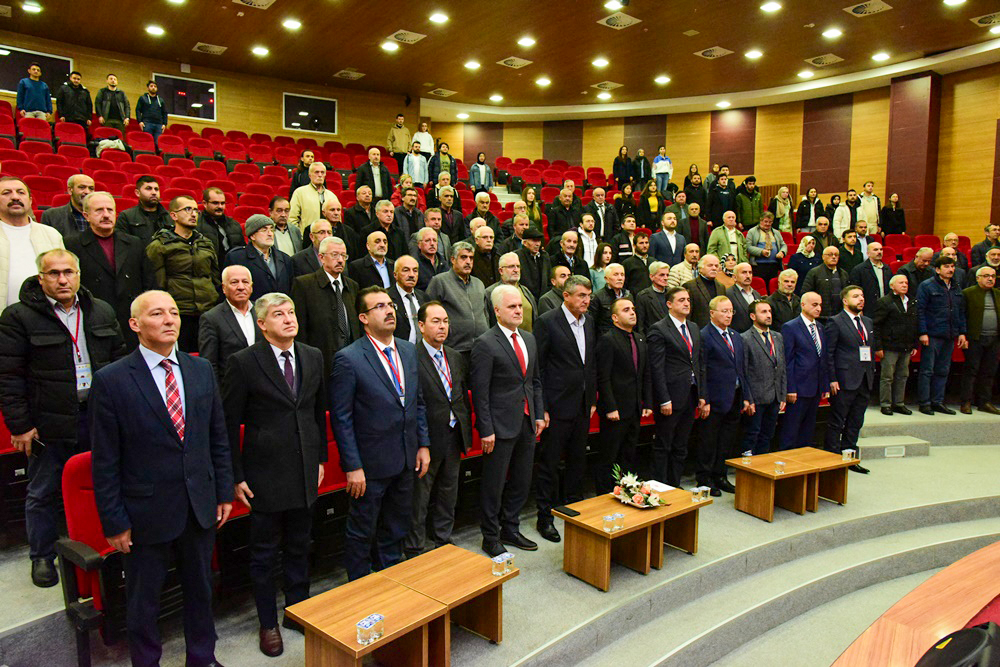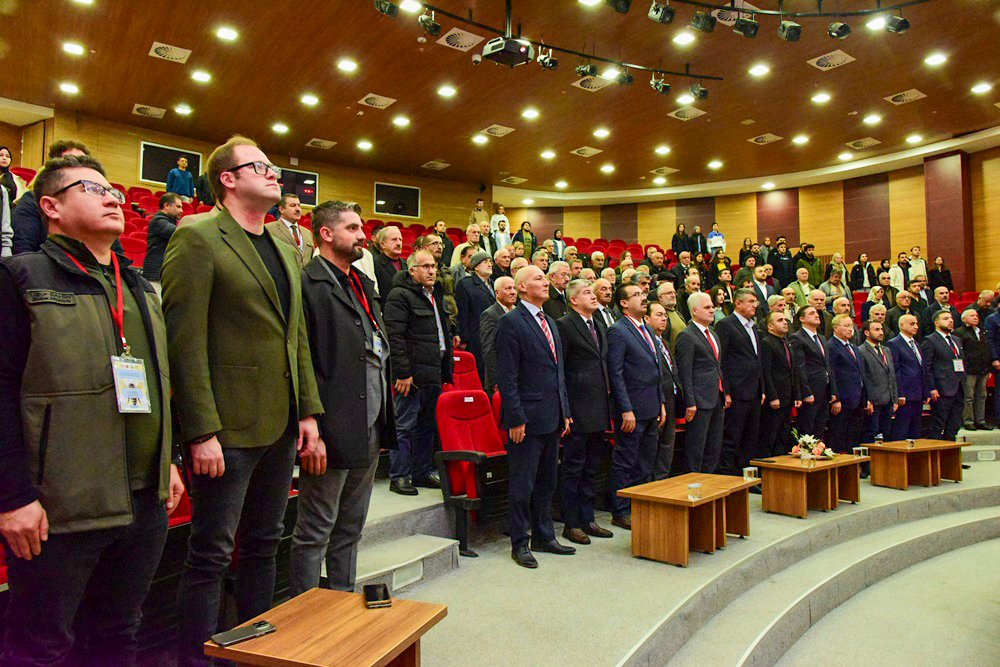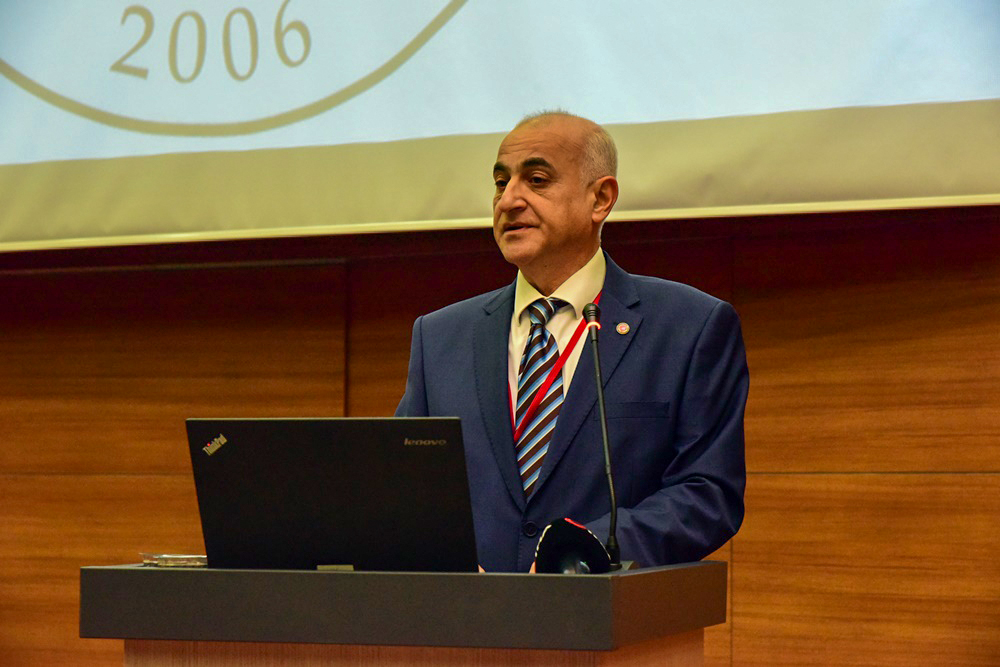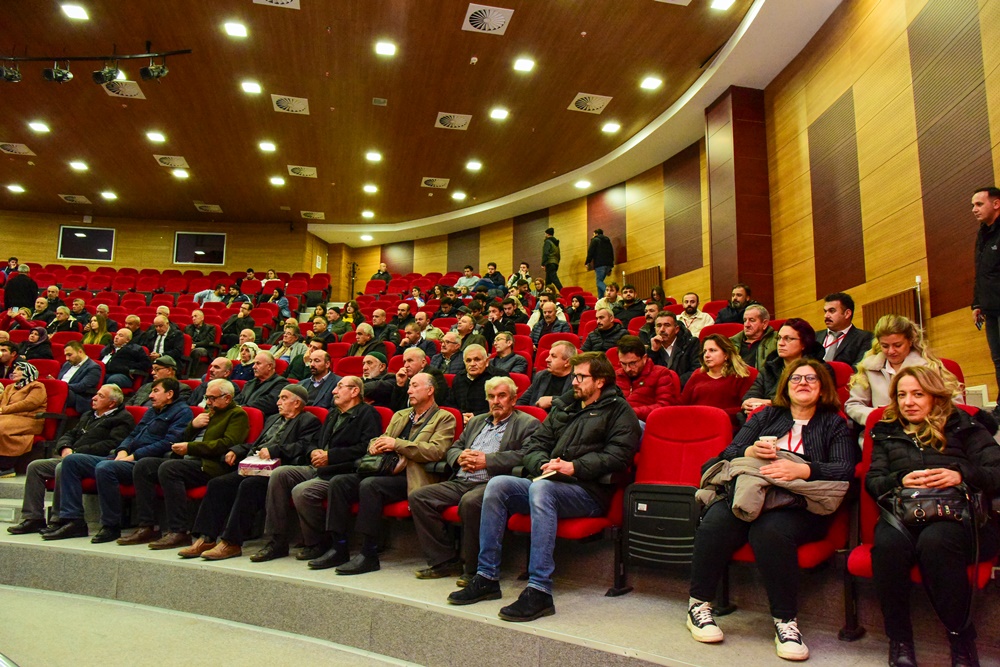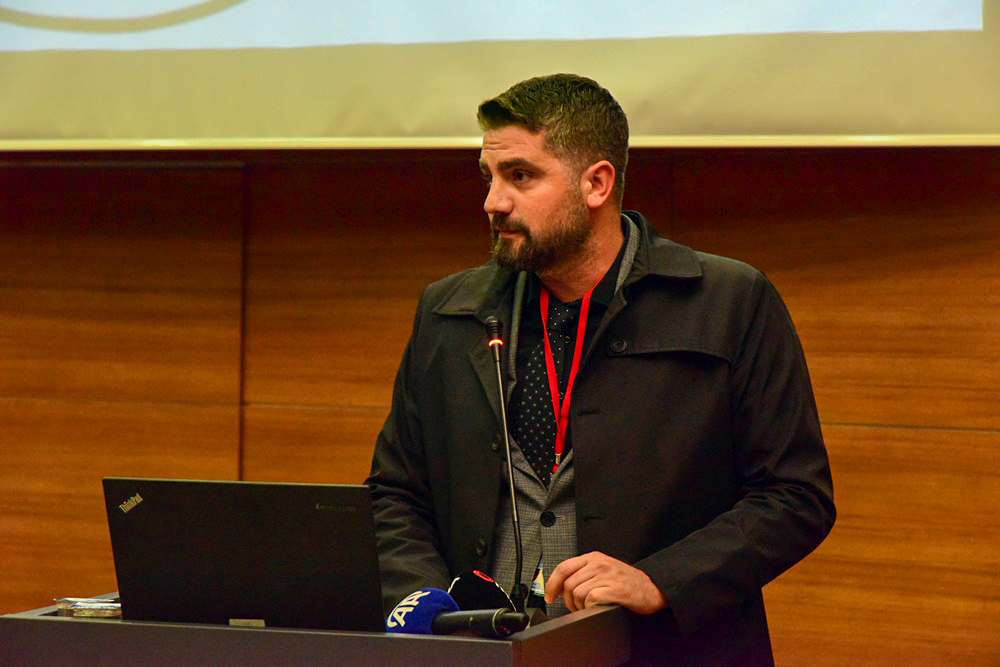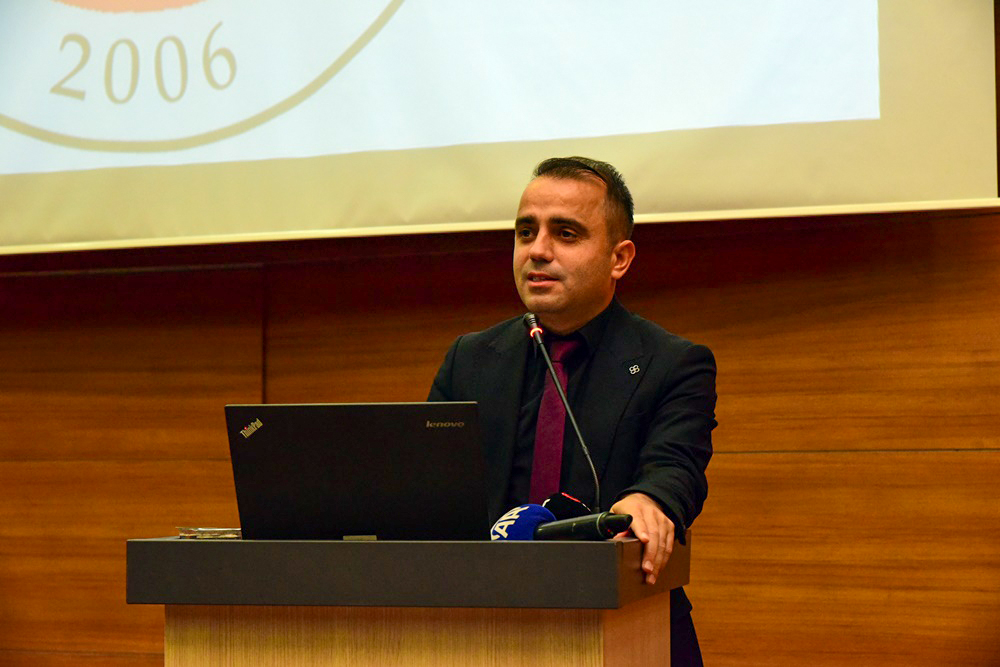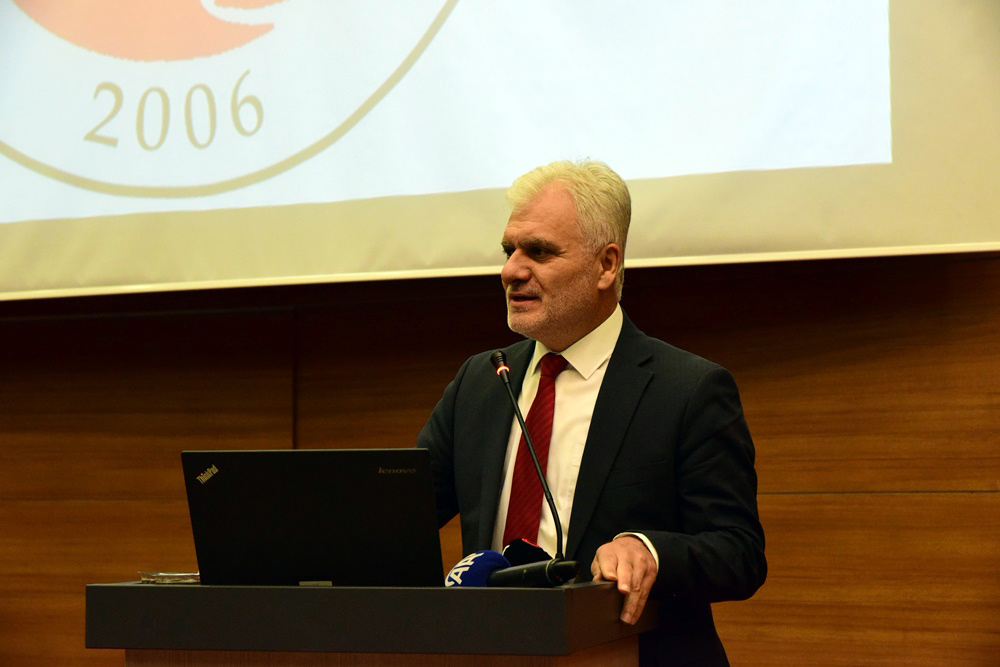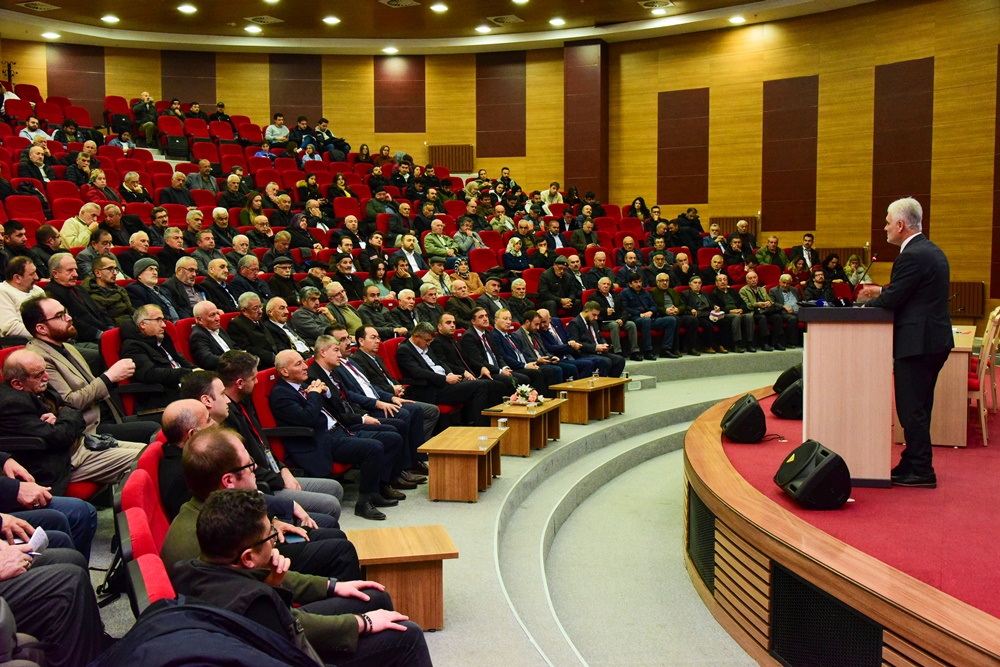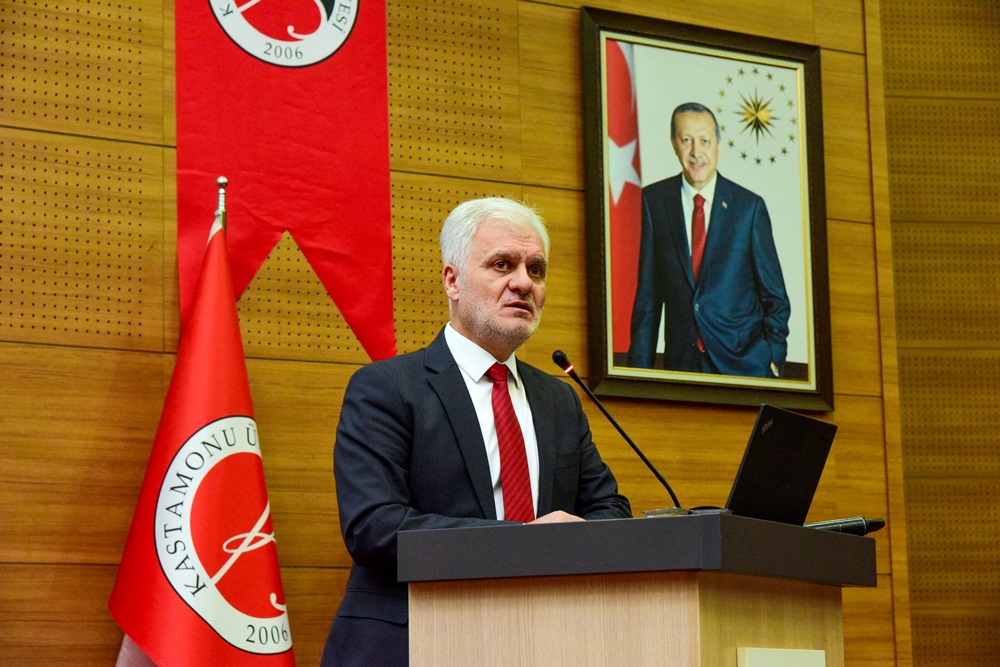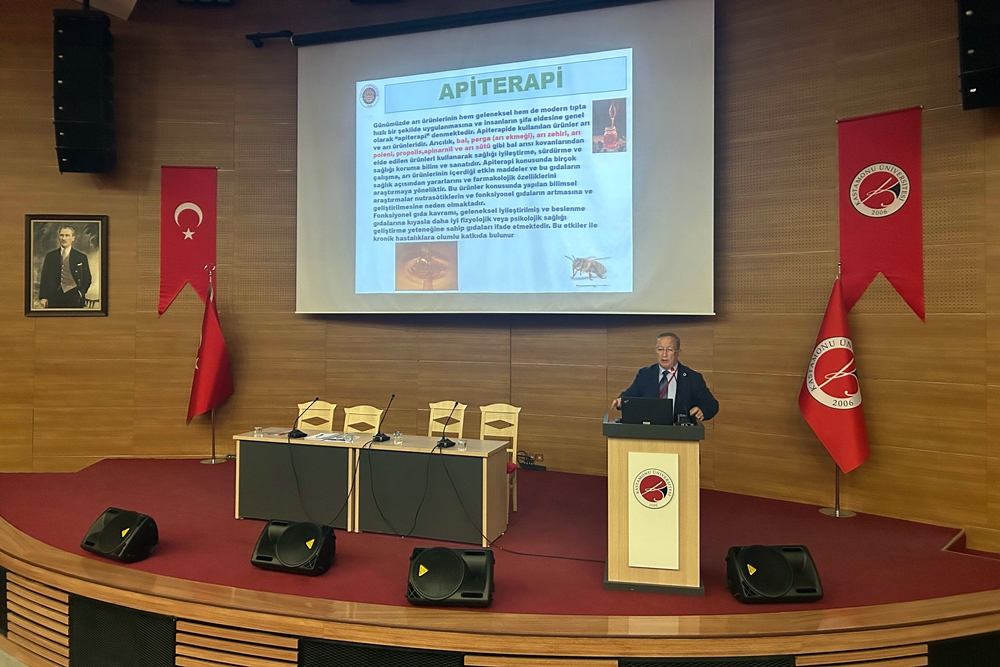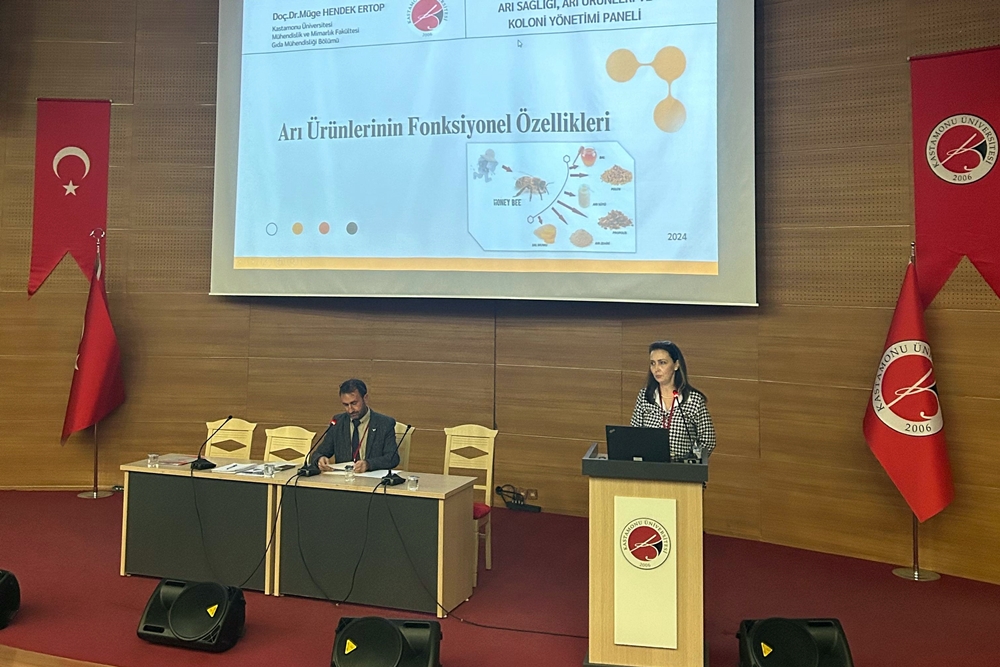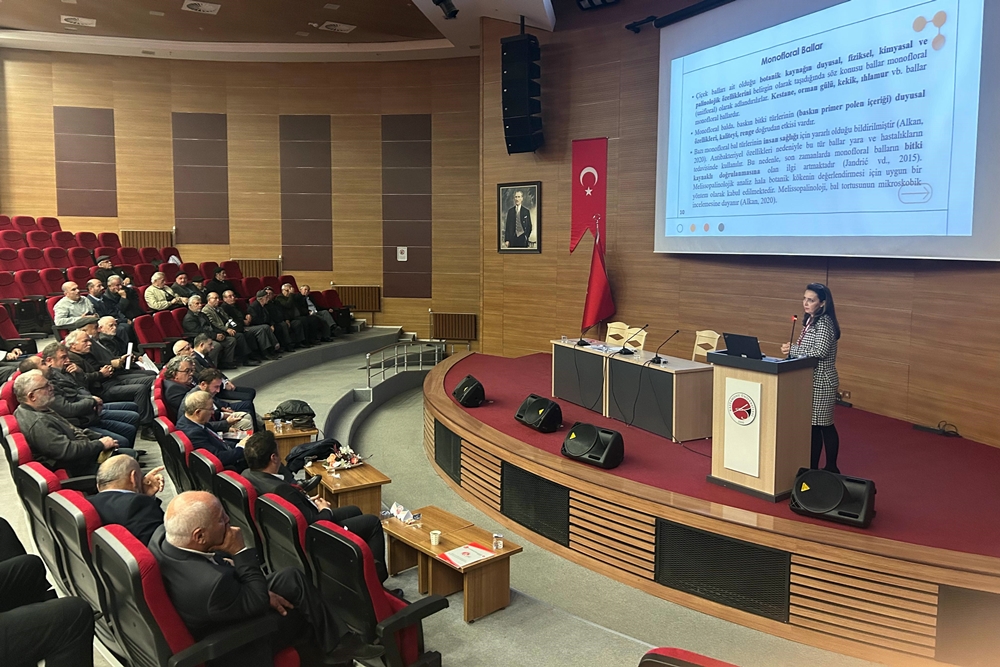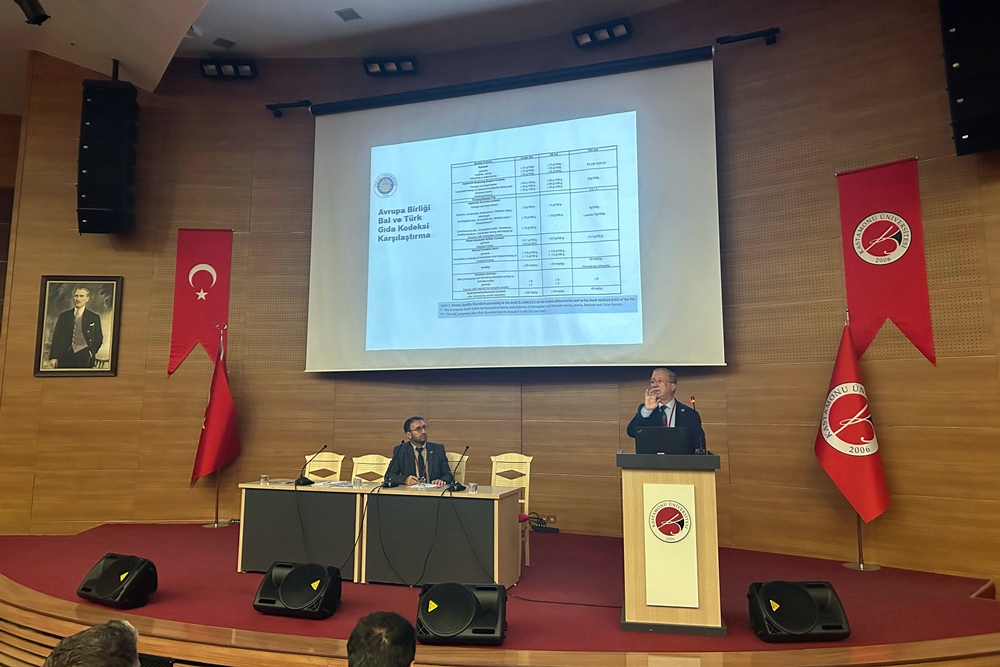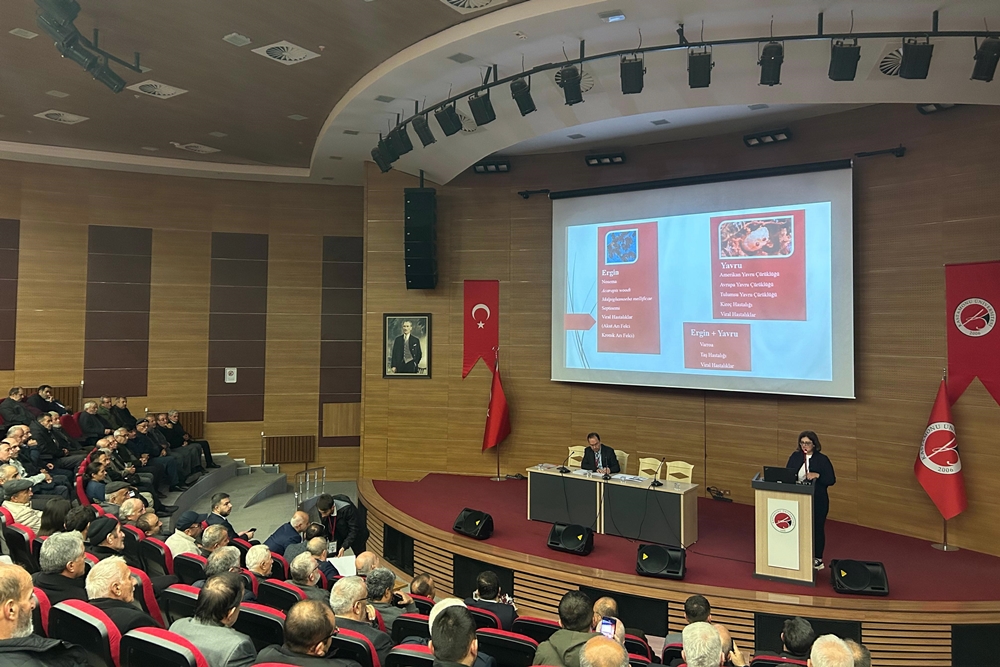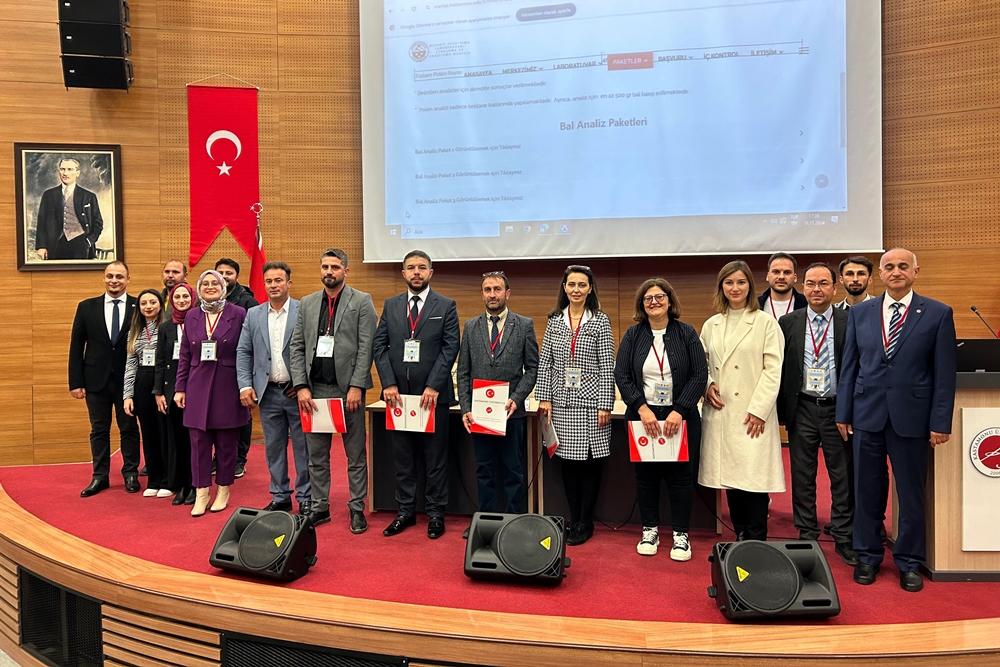
Kastamonu University, Kastamonu Provincial Directorate of Agriculture and Forestry, Kastamonu Regional Directorate of Forestry, and Kastamonu Beekeepers Association held a panel on 'Bee Health, Bee Products and Colony Management' on 18 November 2024. Kastamonu Deputy Governor Ahmet Atılkan, Kastamonu Vice Governor Prof. Dr. Ömer Küçük, North Anatolia Development Agency (KUZKA) Secretary General Dr. Serkan Genç, TKDK Provincial Coordinator Ahmet Kuyulu, Kastamonu Beekeepers Association President Cem Başar, beekeepers, academicians and sector representatives attended the panel held in Sezai Karakoç Hall of the Central Library of our University.
Speaking at the opening of the panel, Prof. Dr. Sabri Ünal, Faculty Member of the Faculty of Forestry of our University and Chairman of the Organising Committee, emphasized that beekeeping is of great importance in terms of environmental sustainability and economic development and stated that such events strengthen the sharing of knowledge and experience. He also mentioned the contributions of our University to the agriculture and forestry areas in the region. He said he believes the panels and training on fundamental issues such as bee health, bee products, and colony management will open new horizons for professionals and beekeepers. Cem Başar, President of Kastamonu Provincial Beekeepers Association, stated that beekeeping is essential for the regional economy and that such events offer excellent opportunities to move the sector forward.
Islam Köse, Head of the Poultry and Apiculture Department of the Ministry of Agriculture and Forestry, explained Turkey's position in the global beekeeping and honey production rankings and stated that we are the world leader, especially in pine honey production. He also noted that chestnut honey production has excellent potential for the Kastamonu region. He said that state support for the sector will increase, and the support provided to beekeepers will reach 1.1 billion TL in 2024. He said these supports will reach up to 190 TL with the contribution made per hive.
Vice-Rector Prof. Dr. Ömer Küçük stated that Kastamonu University supports the beekeeping sector and that they carry out various projects to support the developments in the industry. He also talked about the steps they have taken in branding Kastamonu honey and their work on the quality control of bee products with the accredited laboratories of our University. Prof. Dr. Küçük also touched upon the work of our University in the field of specialization and emphasized that studies aimed at producing in-depth knowledge in strategic sectors such as beekeeping play an essential role in moving the beekeeping sector forward. He also pointed out that investments should increase in the production of value-added products.
Following the opening speeches, Prof. Dr. Sabri Ünal, Head of the Department of Forest Entomology and Conservation, Department of Forest Engineering, Faculty of Forestry, Kastamonu University, who chaired the first session of the panel, stated that Kastamonu is a highly suitable province for honey production with its nature, climate, soil, chestnut presence, and rich flora diversity. However, he stated that the current honey production is relatively low; flower honey is only 10 kilos per hive per year, and chestnut honey is around 2 kilos. Emphasizing that Turkey provides 90 percent of the world's production of pine honey, but a similar success should be achieved in chestnut honey, Prof. Dr. Ünal said that studies should be carried out to investigate the reasons for this low yield and that they would seek answers to the questions in the panel to be held on this subject.
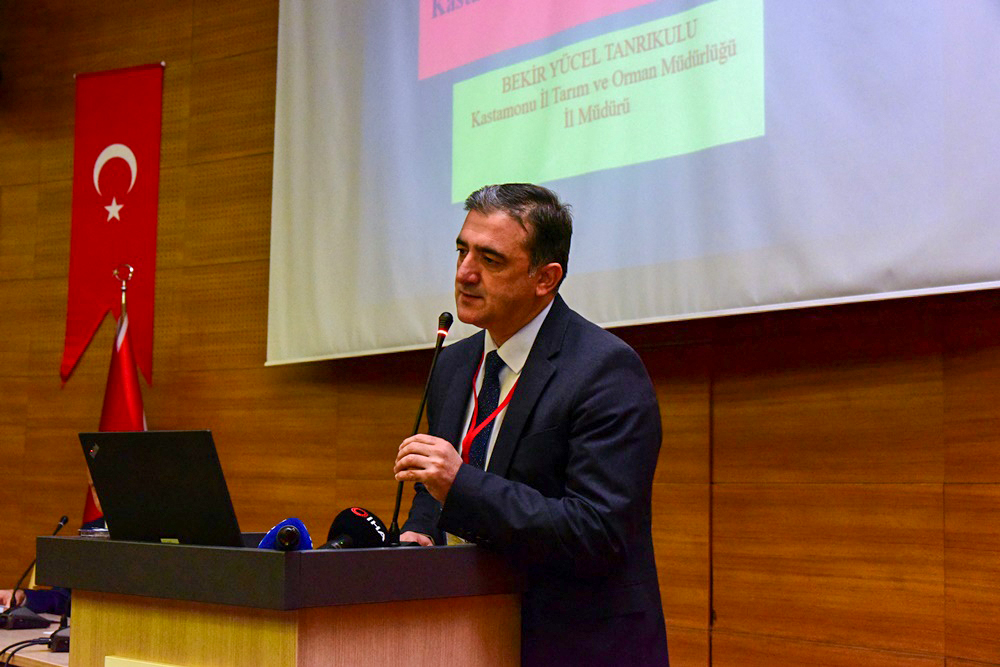
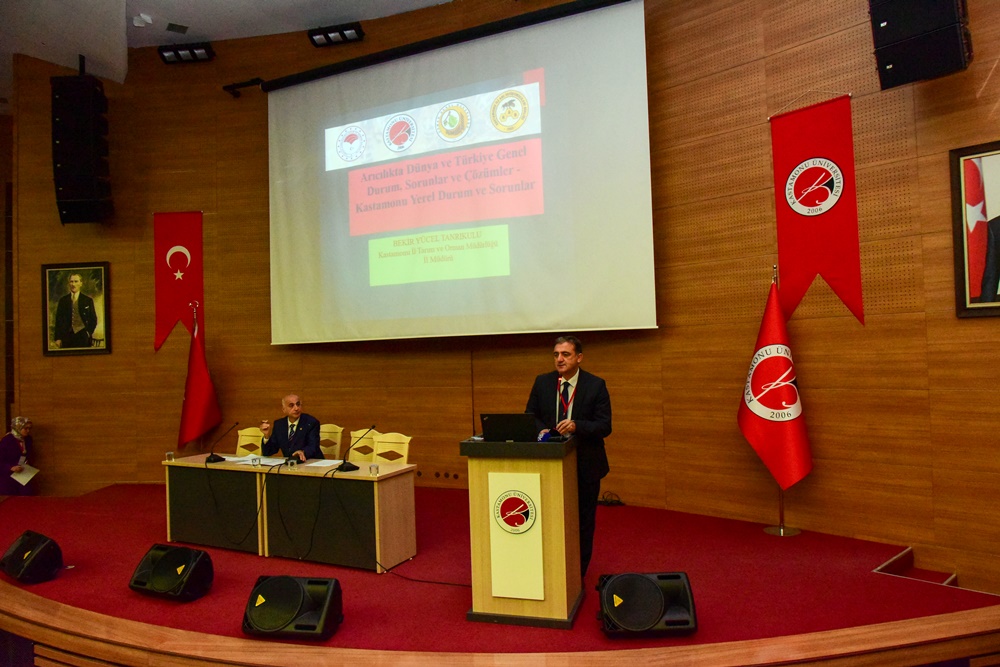
Following the opening speeches, Kastamonu Provincial Director of Agriculture and Forestry Bekir Yücel Tanrıkulu, who took part in the panel as a speaker, shared the global developments in bee health and colony management in his presentation titled 'Overview of beekeeping, problems, and solution suggestions.' While Turkey is essential in hive presence and honey production, Tanrıkulu stated that Kastamonu should have more say in honey production with its rich flora diversity. He also emphasized that theft is one of the biggest problems encountered in beekeeping.
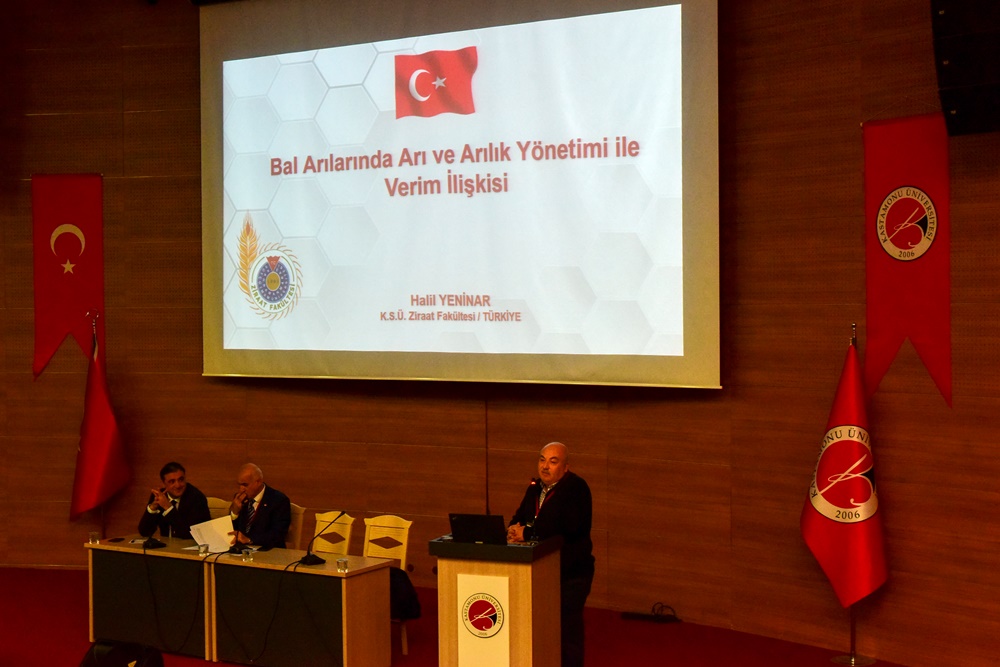
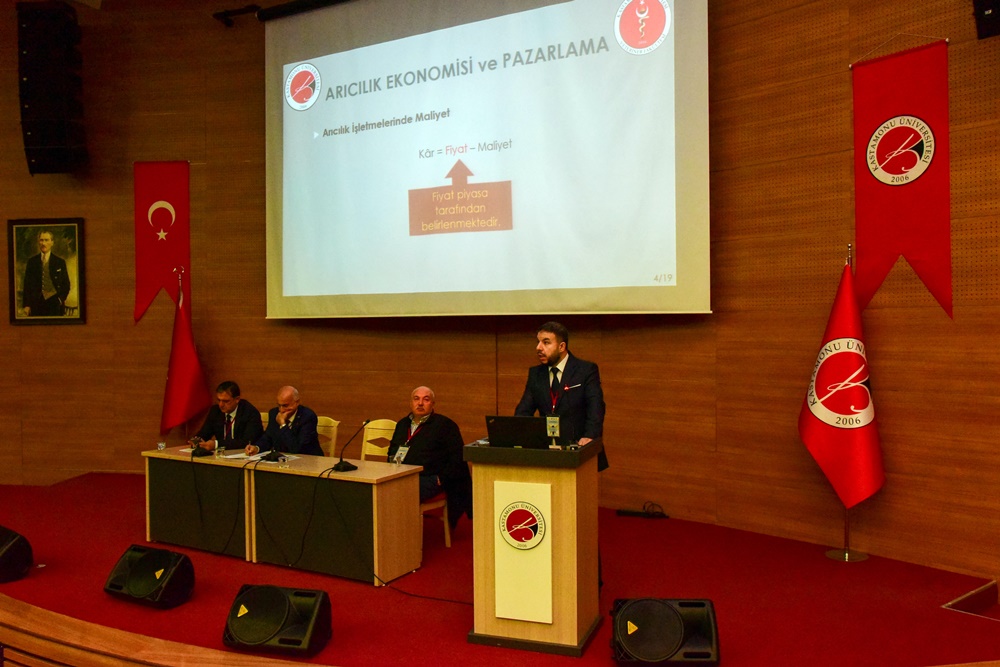
Kahramanmaraş Sütçü İmam University Faculty of Agriculture, Department of Animal Husbandry Prof. Dr. Halil Yeninar made a presentation titled 'Colony Management' in which he conveyed the necessary methods for efficient and sustainable colony management—Faculty Member of the Faculty of Veterinary Medicine of our University Dr. Lecturer. Prof. Dr. Murat Polat, Faculty of Veterinary Medicine, presented information on economic factors and marketing strategies related to beekeeping in his speech titled 'Beekeeping Economy and Marketing.'
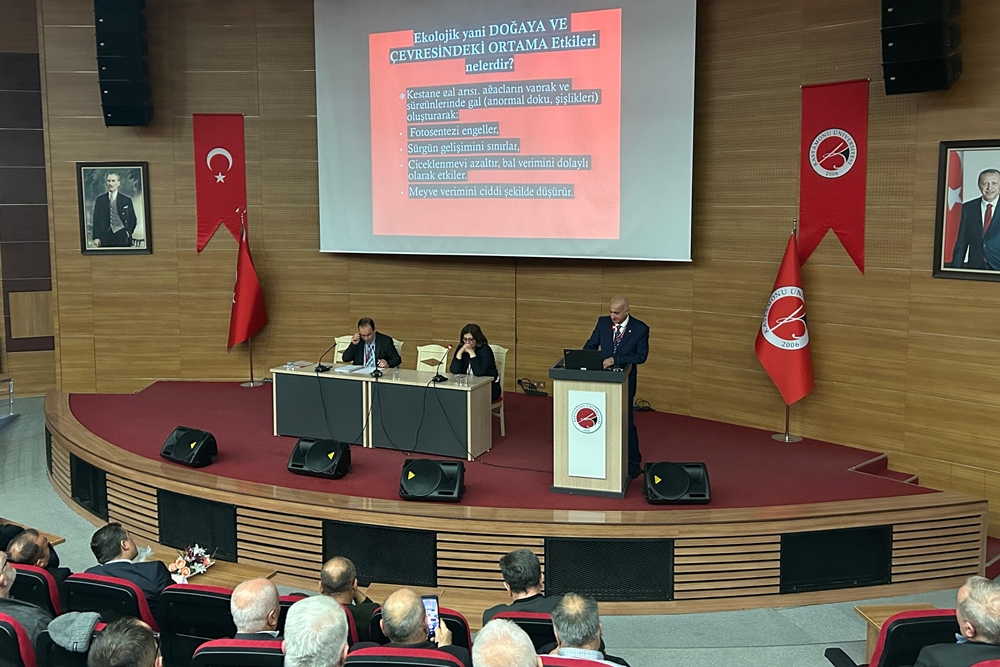
In the afternoon sessions of the panel, presentations by academicians and sector representatives who are experts in their fields continued in the second session chaired by Prof. Dr. Erol Akkuzu, Assoc. Prof. Dr. Ayşe Ebru Borum discussed the topic of 'Fighting Bee Diseases and Pests.' Then, Prof. Dr. Sabri Ünal gave a speech on 'Chestnut Woolly Bee Distribution and Ecology.' Prof. Uğur Şahin presented information on 'Chestnut Woolly Bee and Pest Management with Regional Applications.' In the third session, moderated by Prof. Dr. Talip Çeter, Prof. Dr. Nevzat Artık discussed 'Legislation and Food Safety in Bee Products.' Assoc. Prof. Dr. Müge Hendek Ertop informed the participants about the 'Functional Properties of Bee Products.' At the same time, Prof. Dr. Mahmut Gür and Prof. Dr. Talip Çeter made a presentation titled 'Analyses and Quality Determination of Bee Products.'
The panel ended with a discussion on the future of the beekeeping sector and solutions to the challenges faced.