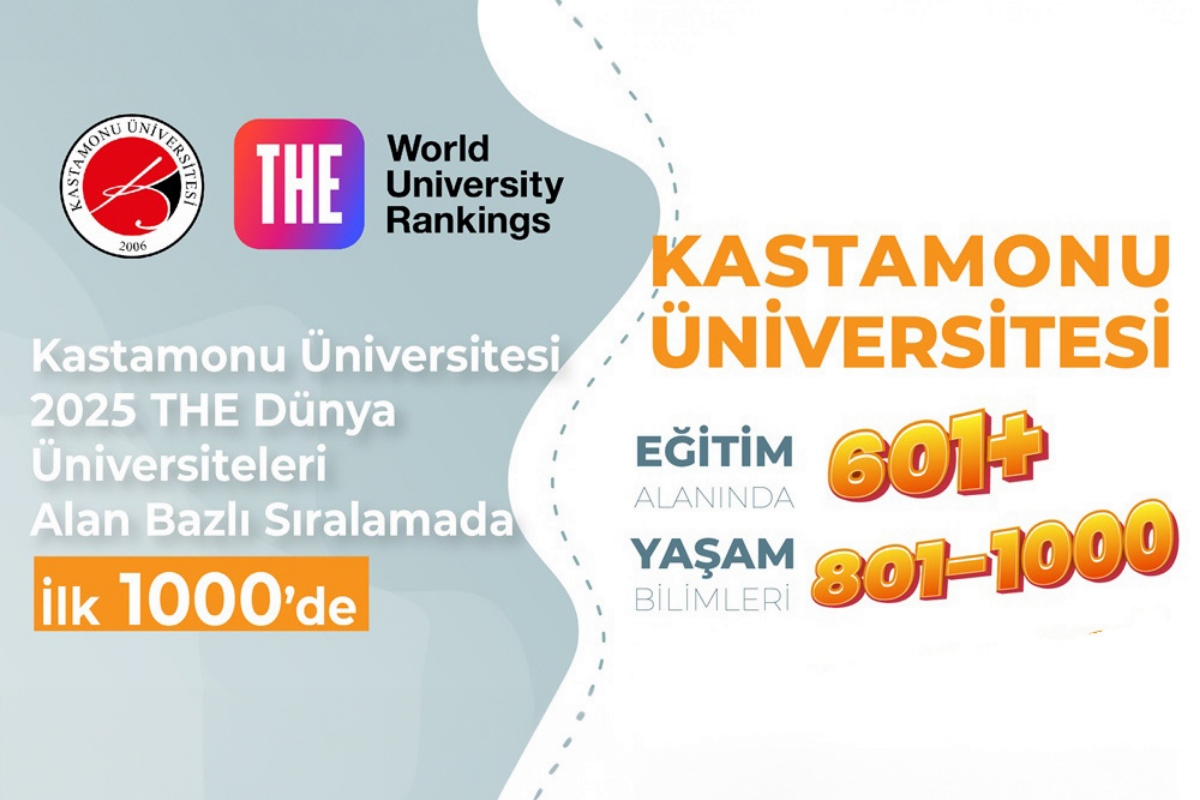
Kastamonu University ranked among the world's top 1000 universities in two categories in the Times Higher Education (THE) 2025 World Universities Field-Based Ranking. In THE 2025 World Universities Field-Based Ranking, our University ranked in the 601+ band in the field of Education and the range of 801-1000 in the field of Life Sciences.
The Field Based Ranking (GRAS), prepared by Times Higher Education (THE), examines the academic achievements of universities in different disciplines and ranks them in specific fields. This ranking sheds light on the educational achievements of universities worldwide by evaluating their performance in particular fields of science.
Our University is among the top 20 universities in Türkiye and among the universities that can be ranked in the World Universities Field-Based Sub-Field Ranking
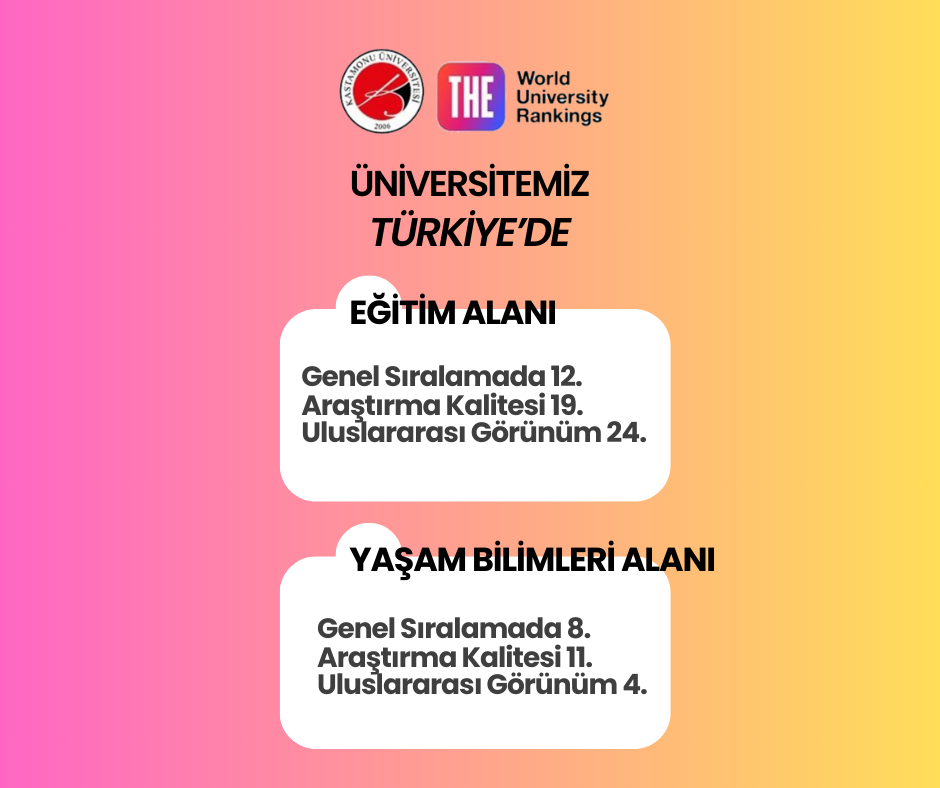
Kastamonu University ranked in the top 20 in all of the fields of Education and Life Sciences among the universities that could enter the list in Türkiye in the Times Higher Education (THE) World Universities Field-Based Sub-Field Ranking. Our University ranked 12th in Türkiye's general ranking in Education, 19th in research quality, 24th in international outlook, 8th in the general ranking, 11th in research quality, and 4th in international outlook in Life Sciences.
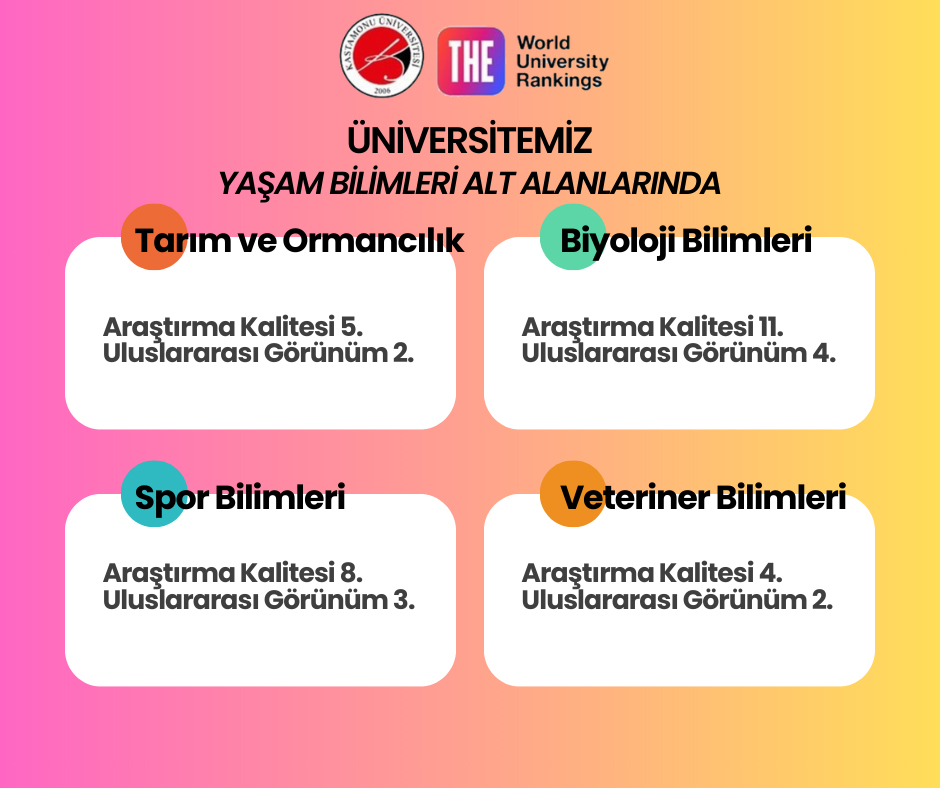
Life Sciences was evaluated under four sub-headings: Agriculture-Forestry, Biological Sciences, Sports Sciences and Veterinary Sciences. Our University ranked 5th in Türkiye in research quality and 2nd in international outlook in Agroforestry. In Biological Sciences, it was listed 11th in research quality and 4th in international outlook. In the field of Sports Sciences, it ranked 8th in research quality and 3rd in international outlook. In contrast, in the field of Veterinary Sciences, it ranked 4th in research quality and 2nd in international outlook.
Our Rector, Prof. Dr. Ahmet Hamdi Topal, emphasized that our University's international target-oriented strategic plans and Education, research, and development activities have yielded successful results. Stating that the most significant stakeholders of these achievements are faculty members and students, our Rector said, 'We thank them, and we continue our work to carry our achievements even further.'
Underlining the importance given to studies such as international student exchange programs, academic cooperation projects, and project writing training, our Rector stated that our University is determined to continue this line of success. He also thanked the President of the Council of Higher Education, Prof. Dr. Erol Özvar, and the Council of Higher Education members for their support and quality standards, which form the basis of the successes achieved in internationalization.